A collaborative pilot pairing person-centered, barcoded meals with smart ovens to increase independence for people with intellectual and developmental disabilities.
The Arc Chemung-Schuyler is leading a collaborative smart meal packaging initiative with Glen Copack and food technology partner Siena Development to increase independence for people with cognitive and developmental disabilities. The project will create three person-centered, barcoded meal prototypes designed for use with smart ovens and will test the technology in four of The Arc’s residential homes. Glen Copack will manage food manufacturing and packaging from its licensed commercial kitchen in Watkins Glen, while Siena Development will guide product, packaging, and prototype development. The Arc’s assistive technology team will support implementation, identify participants, gather feedback, and evaluate outcomes. During the pilot, the partners plan to produce 9,600 meals, reduce approximately 1,200 hours of caregiver meal-preparation time, and establish a scalable model that can strengthen daily independence, improve workforce efficiency, and create inclusive manufacturing jobs.
Preparing safe, nutritious meals can be a significant barrier to independence for people with cognitive and developmental disabilities. Traditional meal preparation requires planning, reading and following multiple steps, using kitchen equipment safely, monitoring cooking times, and responding to unexpected problems. As a result, many people depend on caregivers for daily meal preparation, even when they could complete more of the process with the right supports. At the same time, the shrinking direct-care workforce makes this level of assistance increasingly difficult and costly to sustain. Inconsistent portions, limited meal choices, food waste, and the need to meet individual dietary and texture requirements add further complexity for residential providers. Without an accessible system that connects clearly labeled meals to simple, reliable cooking technology, people may have fewer opportunities to build skills, make choices, and participate meaningfully in preparing their own food.
This project offers a practical, person-centered solution by pairing nutritious, pre-portioned meals with barcodes that automatically guide compatible smart ovens through the correct cooking settings. The simplified process reduces the need to read complex instructions, manage multiple preparation steps, or independently monitor time and temperature, giving people with cognitive and developmental disabilities a safer and more accessible way to participate in preparing their own meals. Individual preferences, dietary needs, and texture requirements can be incorporated into meal design, supporting greater choice and consistency. For caregivers and residential providers, the system reduces routine meal-preparation demands, creates more time for individualized support, and may lower food waste and operating costs. By combining The Arc’s disability and assistive technology expertise, Glen Copack’s licensed food manufacturing capacity, and Siena Development’s product-development knowledge, the pilot creates a model that can be evaluated, refined, and expanded to additional homes and organizations.
Results are not yet available because the project remains in the prototype phase.
During the pilot, the team will test three smart-meal designs in four residential homes and gather feedback from participants and support staff. Measures will include ease of use, safety, meal satisfaction, participation in meal preparation, caregiver time saved, food and operating costs, and the system’s ability to accommodate individual dietary and texture needs. The findings will be used to refine the meals, packaging, barcode system, and smart-oven process before determining whether the model is ready to expand to additional homes and organizations.
Sal Garozzo is a social entrepreneur with more than 30 years of experience building innovative programs and social enterprises for people with disabilities. In a former Business Development role (at The Arc Ulster-Greene), he led preferred-source contracting and social enterprise growth, and earlier he helped create jobs for over 400 people with disabilities. Drawing on more than a decade of assistive technology leadership, he leads the following pilot linking food manufacturing, smart technology and inclusive jobs.
Kelly Miller leads The Arc’s Business Services Division, the parent company of Glen Copack, The Arc’s food co-packing business in Watkins Glen – which also builds job skills for people The Arc supports. She completed Cornell University’s FDA-recognized food safety training for human food production, the training required to serve as the food-safety lead (Preventive Controls Qualified Individual) at a food processing facility. That training enables her to design and document risk-based food safety controls for the pilot’s meals. Kelly also holds a Principles of HACCP Certification (Hazard Analysis Critical Control Point).
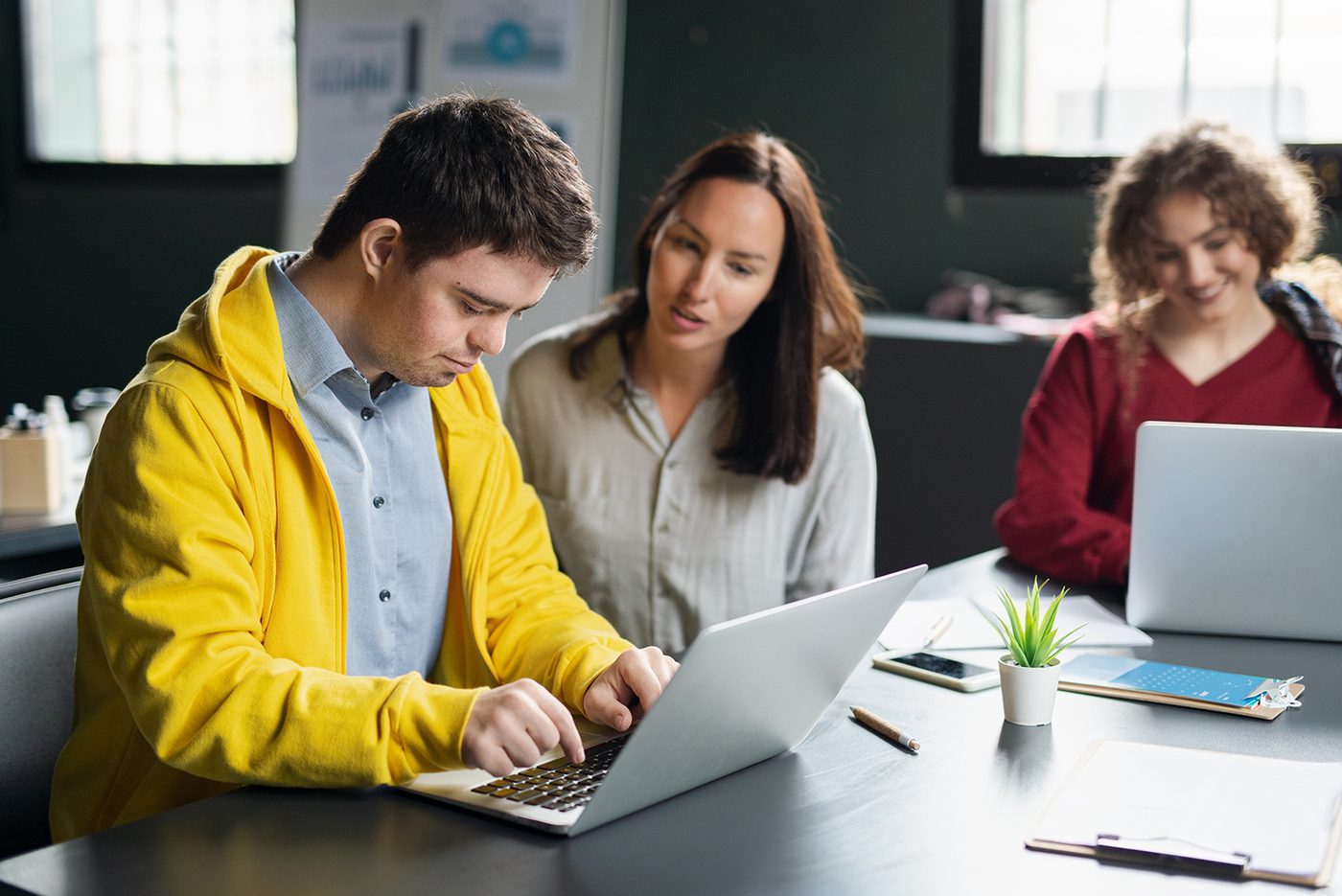
Assistive and remote support technology that helps people with intellectual and developmental disabilities live more independently at home, at work, in school, and in the community.

A nationally accredited NYSTART/CSIDD program that prevents crises, reduces hospital admissions, and builds lasting stability across OPWDD Region 1.